
Football Games Without Competition
Some evenings my son doesn't want to win. He doesn't want to lose either. He just wants to kick a ball about without either of those being on the table, and it took me a while to realise that's a completely valid way to play football.
We talk about football as if competing is the whole point of it, and for a lot of kids, a lot of the time, it is, and that's great. But not every session needs a winner. Some of the best twenty minutes we've had in the garden had no score, no opponent, nobody trying to beat anybody. Just the ball, moving, with a bit of a shape to it so it doesn't feel aimless. These are non-competitive football games for kids who need the shape of football without the contest attached to it.

Four games, zero winners
What "No Competition" Actually Looks Like
If your child goes quiet or flat the moment a game turns competitive, even a gentle one, it doesn't mean they don't like football. It might just mean they need more of this kind of play in the mix before competition feels like fun rather than a test.
A completely unstructured kickabout is fine, but it can run out of steam fast because there's no shape to hold anyone's interest. The games below have a shape, a challenge even, they just don't have an opponent or a winner. These are football games with no winner, not football games with no shape at all.
- Keepy-uppy streak. How many touches in a row before the ball hits the ground. You're not against anyone, including your own best score if that starts to feel like pressure. Some days we count. Some days we don't bother.
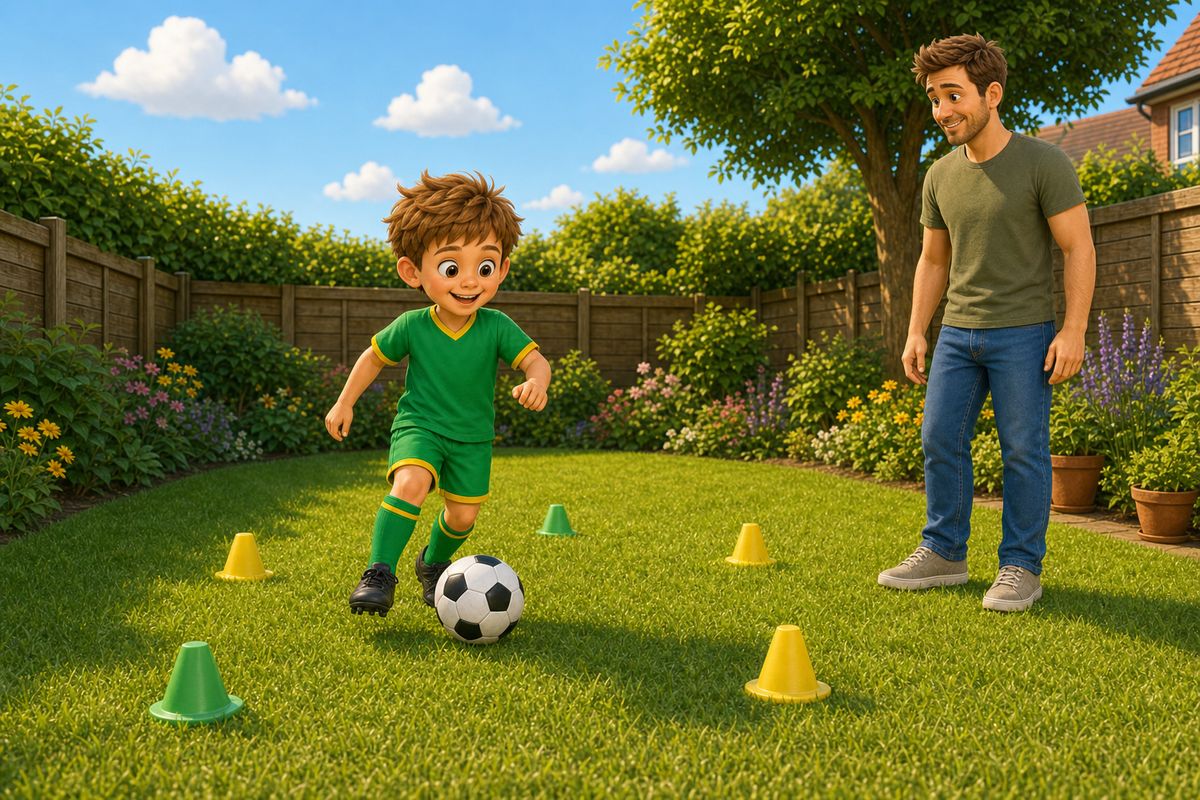
- Cone trail. Set up a wandering line of cones across the garden and dribble the ball through the whole route. The "win" is finishing the trail, not beating a time or a person. Change the trail together each time so it stays fresh.
- Target practice with no scoring. Pick a spot on the fence and just see how many times in a row the ball can land there. No points, no tally, just a satisfying little run of successful hits.
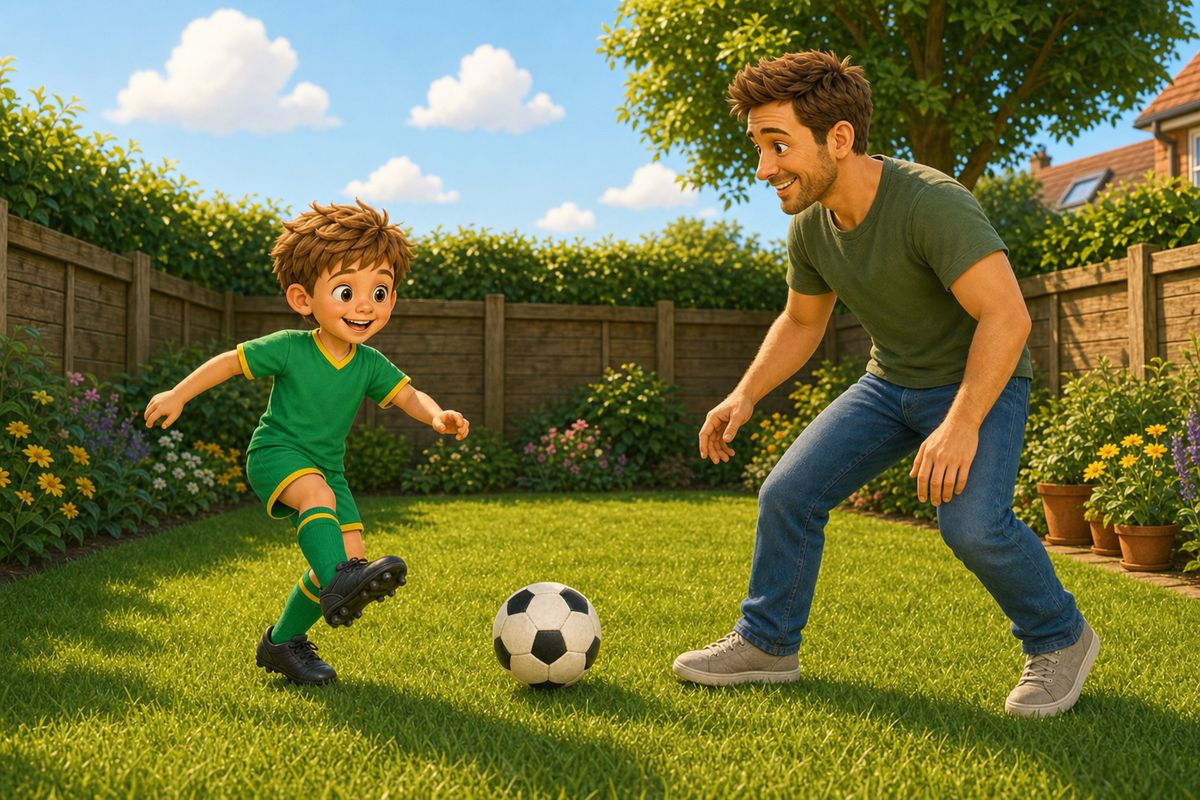
- Two-person keep-it-up. Pass the ball back and forth and see how long you can keep a rally going without it stopping. You're on the same side here, which changes the whole feel compared to 1v1.
Why we built this page anyway
Why This Earns a Proper Place Here
I nearly didn't build this one, if I'm honest, the numbers on it are modest compared to some of our other pages. But every parent I've spoken to who's got a child who avoids football eventually mentions some version of "he just doesn't like it when it's a competition." That's not a small or rare thing, it's just quieter than the confident, competitive kids who ask for a match every night. This page is for the quieter half of that.
Two phrases, two totally different games
What to Say to Keep It Feeling Low-Stakes
Skip anything that sounds like scorekeeping, even accidentally. "Let's see how many we can do together" works better than "let's beat your last go," even though they sound similar, because the second one sneaks a competitive frame back in through the side door. If your child brings up a number themselves, "we got to eight!", that's them choosing to compete, and that's completely different to you setting it up for them.
The evidence for lower-pressure play
Why Some Children Need This More Than Others
None of this is guesswork on my part. Crane and Temple's 2015 systematic review, a review of why children drop out of sport, looked at 43 studies and found perceived lack of competence and low enjoyment among the most repeated reasons children walk away from a sport; a competitive frame can turn up the volume on both for a child who isn't confident yet.
Cooperative games tend to be enjoyed more too. A study on cooperative games and enjoyment followed 285 German schoolchildren through their PE lessons and found the cooperative condition produced higher enjoyment than the comparison games, put down partly to increased social connection and a stronger sense of competence. A study on cooperative play in young children found something similar with much younger children: 65 preschoolers played cooperative and competitive board games over six weeks, and while both produced similar amounts of kind, sharing behaviour, the children visibly enjoyed the cooperative games more.
One honest caveat: the German PE study covers children aged ten to sixteen, older than the five-to-nine age band this page is written for, and the preschool study uses board games rather than football. Neither proves what happens in one family's back garden. Together they support cooperative play being more enjoyed generally, not football-specific proof.
Safety first: As with any of our garden games, use a ball suited to the space and keep an eye on the usual hazards nearby, fences, windows, anything breakable within range.
See how Our Kickabout researches its pages.
Straight answers
Common Questions About Playing Without Competition
Are non-competitive games still good practice for football skills?
Yes. All four games above use real football touches, dribbling, passing, control, the only thing removed is the winner.
My child asks for a score themselves, is that a problem?
No. That's your child choosing to compete, which is a completely different thing to an adult setting a competitive frame from the outside. Let it happen.
Won't my child need to get used to competing eventually?
This page isn't a replacement for competitive play. It sits alongside it, so competition becomes something your child chooses, not the only shape football takes.
Keep going
Where to Go From Here
This sits alongside competitive play, not instead of it. If two kids at different skill levels is the actual situation, the easiest entry point for a reluctant sibling is worth a look too.
Is competition the actual problem?
If competitive games are the ones causing the flat mood in the first place, our mistake-proof football games guide is worth reading next, it covers a lot of the same ground from a slightly different angle.
Want a self-pacing shooting game instead?
If your child prefers working against a target instead of another person, a self-pacing shooting game might suit them better.
Try the self-pacing shooting gameNew to all this?
Start with the full Confident Beginners framework for more pressure-free ways into football.
Tonight's five minutes
Try the Two-Person Keep-It-Up, No Score at All
Pass the ball back and forth and see how long you can keep the rally going together, no opponent, no tally, no pressure.