Is it safe to head the ball?
What the FA says about young children and heading, and what to tell a child who wants to try.
Read about heading
Stop the game first.
If your child has taken a knock to the head, sit them down, look at them properly and decide whether this is a call to 999 or 111 or a quiet evening of watching.
If your child bumps their head playing football, stop the game and sit them down. Check the NHS red flags first. If they were knocked out, cannot stay awake, have a fit, are being sick or seem confused, call 999 now. For any other sign on the list, call 999 or NHS 111 as the list says (the NHS page on head injury and concussion). If they seem fine, an adult stays with them for at least the first 24 hours and football waits. The NHS says no contact sports for at least 3 weeks, and rough play waits a few days.
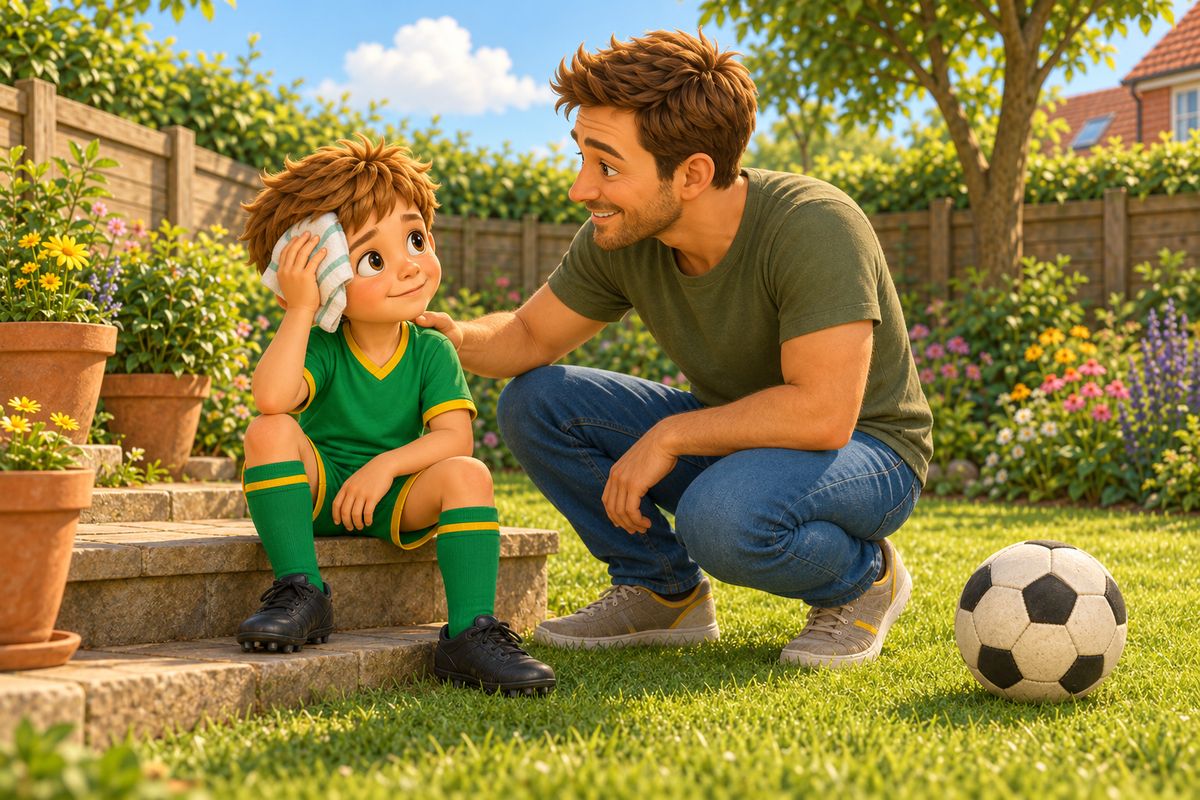
The first time my child went down after a clash in the garden, I wanted them back up and playing within a minute. Sitting them down was the better call. This is first-aid orientation, not medical advice, so when you are unsure, ring 111.
Sort it in two minutes
The NHS lists the signs that need an emergency response and a second list for NHS 111 (the NHS page on head injury and concussion). This table is those lists reworded for a parent standing on the lawn, not a replacement for them.
| What to do | What you see |
|---|---|
| Call 999 now | Knocked out, even briefly, whether or not they have woken up; cannot stay awake or keep their eyes open; a fit; being sick. Clear fluid from the ears or nose; new numbness or weakness; confusion or problems with understanding or memory. Problems with sight, hearing, balance, walking or speech; a headache that does not go away with painkillers. Also a dent in the head or something inside a head wound; changed behaviour such as being more irritable; a fall from more than 1 metre or 5 stairs. |
| Call NHS 111 now | Feeling dizzy; any other symptom you are worried about; or you are unsure and want a clinician to decide. |
| Watch at home | They cried, have a bump or a mild headache and are otherwise themselves. An adult stays near for at least 24 hours. |
The table cuts the NHS lists short, so read the full NHS page as well. When in doubt, call 111. The football guidelines put it as "If in doubt sit them out" (The FA's concussion guidelines).
If you are told to go to A&E, a well adult can take your child there. If your child gets worse on the way, pull over safely and call 999.
If you are wondering about heading, the guidance on young children and heading is in heading the ball and young children.
The first 24 hours
Most knocks turn out to be a bump and a sulk. The job is to notice a change, not to prove nothing is wrong.
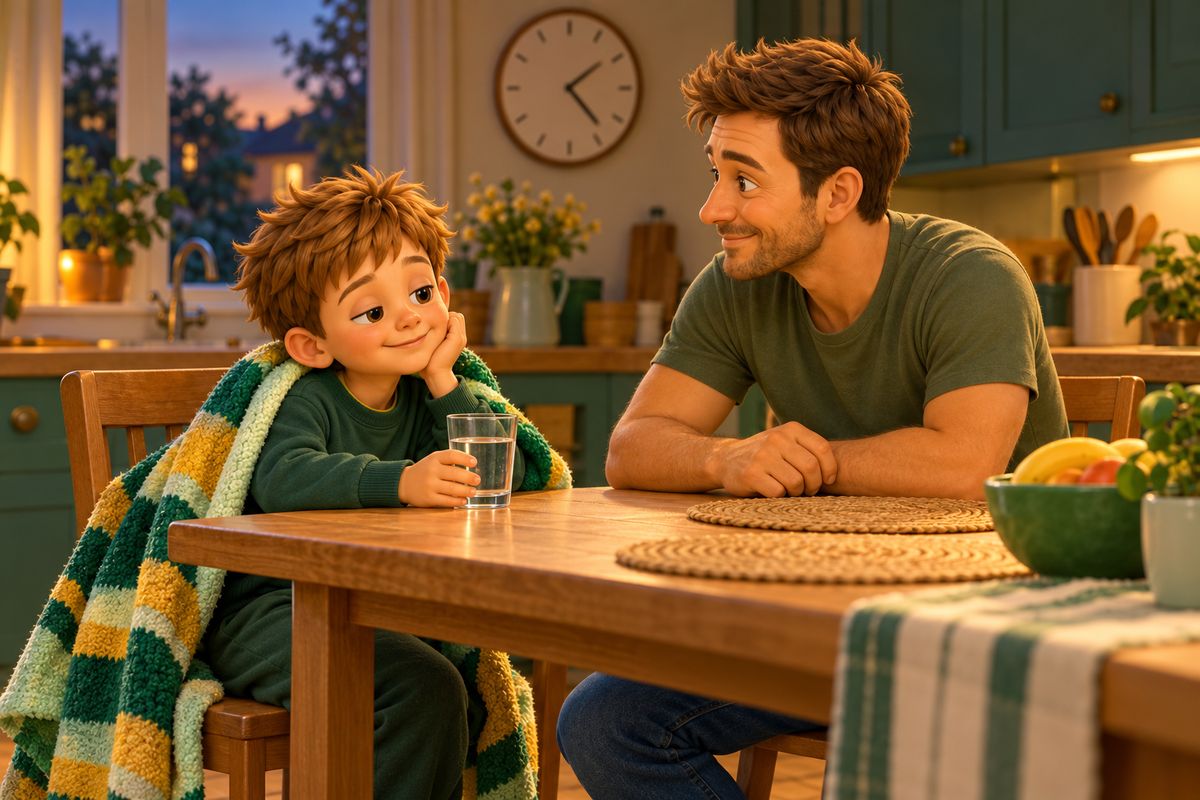
Sit them out. Stop the game for everyone and say it plainly. A child who wants to carry on is a reason to sit them out for longer, not shorter.
Cold, wrapped. The NHS suggests an ice pack, or a bag of frozen peas, wrapped in a tea towel and held on the bump for short spells to bring down swelling (the NHS page on head injury and concussion).
Quiet and close. An adult stays with them for at least the first 24 hours (NHS). Offer a drink and rest. After a concussion, the football guidelines also count school work and screens as things to rest from (The FA's concussion guidelines). For a headache, the NHS mentions paracetamol; follow the packet or ask a pharmacist. The NHS says to avoid aspirin and ibuprofen after a head injury because they can increase the risk of bleeding.
Check, don't quiz. Watch for sleepiness that is more than tiredness, new vomiting or odd behaviour, and call 999 if any appear (NHS). A headache that does not go away with painkillers is on the NHS list of signs that need 999 or A&E.
Tell their school or club. Send a quick message so nobody puts them back into rough play at break or at training.
"Shall we sit here a minute and have a drink? You can tell me if anything feels funny."
The NHS says a child does not need to stay awake if they are tired, but it gives no rule on waking a sleeping child during the night. If you are unsure, ring 111.
If the ball also hit their face and made their nose bleed, the steps are in a bleeding nose after a ball to the face.
Slow, soft, one step at a time
I used to think a child who looks fine is fine. A calm week after a clash of heads in the garden taught me that looking fine and being ready are two different things.
The NHS says no contact sports for at least 3 weeks, and children should avoid rough play for a few days (the NHS page on head injury and concussion). The FA's concussion guidelines set a 14-day rest for under 19s, then a staged return with at least 48 hours at each stage. Contact play waits until at least 3 weeks have passed, even if the stages finish sooner, and a doctor clears contact practice (The FA's concussion guidelines).
| Stage | What it looks like at home | Move on when |
|---|---|---|
| Rest | No football, no running about and no screens marathon. | Symptoms have settled, at least 14 days have passed and a doctor agrees (FA). |
| Light walking | A walk to the shop. | No symptoms during or after, and at least 48 hours have passed. |
| Soft passing | Slow passes on the ground a few steps apart, no heading. | No symptoms 48 hours later (FA). |
| Normal play, no contact | The usual garden games, with no tackles and no heading. | No symptoms, and at least 48 hours have passed. |
| Full play | Back to everything except heading practice, which stays out at this age. | At least 3 weeks have passed since the knock and a doctor agrees before contact practice. |
The stages are a sensible reading of the guidance, not a tested garden programme. A child whose symptoms return goes back a step and tells the doctor.
The NHS says to see a GP if symptoms last more than 2 weeks or you are not sure it is safe to return to sport. If the break came after an illness instead, see football after being ill.
What is known and what is not
The NHS lists the signs that need 999 or NHS 111, describes home care and says no contact sport for at least 3 weeks. It is a general condition page, with nothing written for football or for a garden.
The FA's concussion guidelines say a player with a suspected concussion must be removed from play and must not return that day. For under 19s they set a 14-day rest, then stages of at least 48 hours each. The guidelines also say there is currently a lack of evidence on how well such guidelines prevent long-term harm.
These are clinical guidelines for sport in general, not a study of five-to-nine year olds in garden football, and they cannot say how long your child specifically needs. No study has tested a garden return routine, so the five stages above are an arrangement, not a result.
Quick answers
Stop play, sit them down and check the NHS red flags. Call 999 or 111 if any apply, otherwise an adult stays with them for at least 24 hours (NHS).
Call 999 if they were knocked out, even briefly, cannot stay awake, have a fit, are being sick, have clear fluid from the nose or ears, new weakness, confusion, or trouble walking or speaking (NHS).
The NHS says no contact sports for at least 3 weeks, and rough play waits a few days (NHS). The FA's guidelines for under 19s set a 14-day rest and a step-by-step return (FA).
Not during the return. The soft-passing and no-contact stages keep the ball on the ground and heading out, and heading practice stays out at this age. For the general guidance see heading the ball and young children.
Yes, a short message so nobody puts them into rough play before they are ready. The FA guidelines ask parents and coaches to stay watchful for returning symptoms (FA).
Keep going
Three places to go next, depending on what happened. More on kit and safety is in Kit, Rules & Safety. And what to do when a child is winded by a football covers a hard ball to the stomach. For the more everyday fall, cleaning and covering a grazed knee has the steps.
What the FA says about young children and heading, and what to tell a child who wants to try.
Read about headingSix first-aid steps for a bleeding nose and the red flags that mean more.
Read about a bleeding noseA play, light play or rest table and a gentle first game back.
Read about easing back inTonight's five minutes
Read the table once now, while nobody is hurt. Then a bump on the lawn is a two-minute decision, not a panic.