Time for new football boots?
Astro or firm ground, fit and what to spend, for a child's first pair.
Read about first boots
A sore heel is worth listening to.
If your child limps or rubs a heel after football, it is often a growth-related irritation that eases with smaller changes, not a reason to stop playing for good.
Child heel pain after football in a growing child is often Sever's disease, an irritation where the Achilles tendon pulls on the heel bone during a growth spurt (the Cambridge University Hospitals leaflet on Sever's disease). It usually settles with less impact, cushioned footwear and calf stretches. The same leaflet says there is no evidence that sport causes long-term damage to the heel, so football can often carry on in a gentler form. Only a clinician can say what it is, so check the red row of the traffic light below and see a GP if any of it applies.
I used to wave away every complaint after a kickabout as tiredness. A heel that hurts every time is worth a proper look.
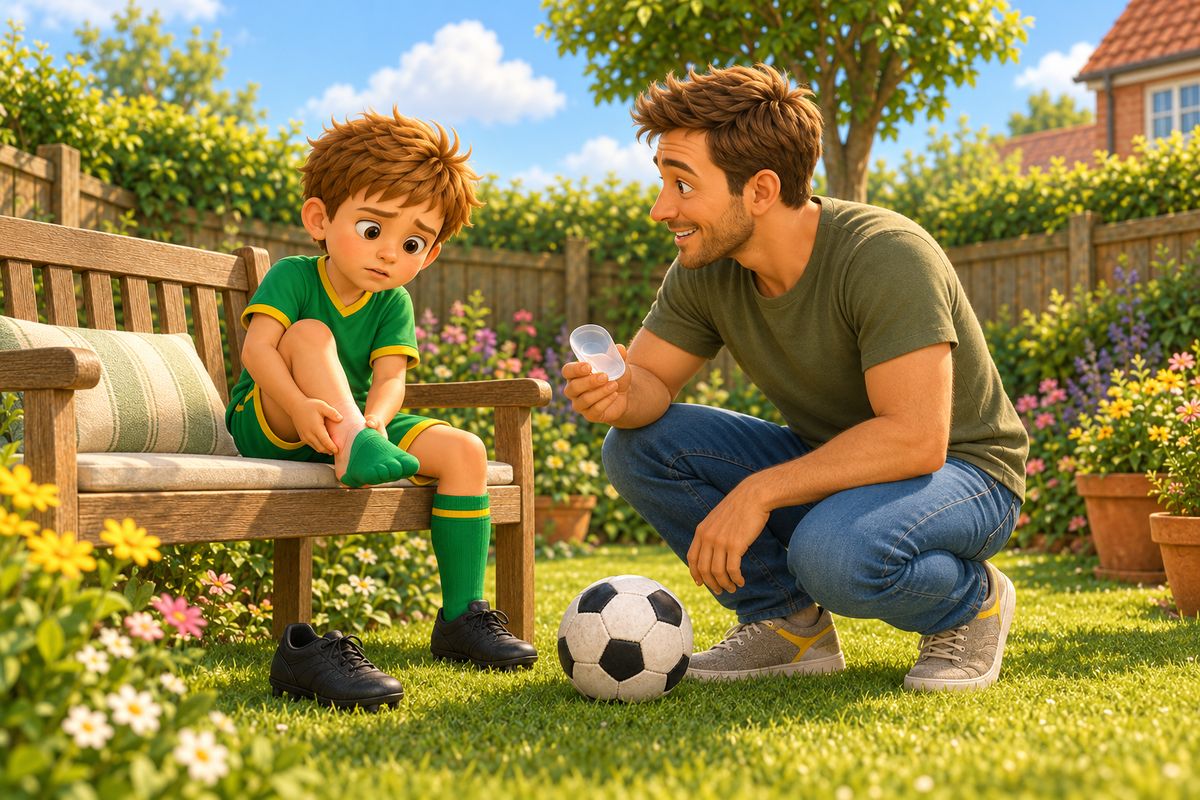
A growing bone and a tight tendon
The Cambridge University Hospitals leaflet explains that "bones grow quicker than muscles and tendons when a child goes through a period of increased growth" (the Cambridge University Hospitals leaflet on Sever's disease). The Achilles tendon then tugs at the heel bone each time the foot pushes off, and running and jumping make that tug happen often.
The leaflet lists the signs you might notice. These are heel pain during activity, limping or walking on toes, a tender heel when it is squeezed, swelling where the Achilles tendon meets the bone and tight calf muscles. Your child may have only one or two of them. Mild swelling there is one of the leaflet's signs, while swelling that spreads or comes with redness or heat is a red sign in the traffic light below.
A systematic review of treatments looked at nine studies covering about 330 children aged 6 to 15, with the condition mostly reported in children aged 8 to 15 (a 2013 systematic review of treatments). The review also notes that activities with frequent running and jumping, such as football, produce some of the highest pain levels.
That review judged the evidence limited and most studies were small, so it cannot tell you which single treatment is best for your child.
Only a clinician can say whether a sore heel is Sever's disease, because other things cause heel pain too. Treat everything on this page as general information, not a diagnosis.
How much football fits
Heel pain in a growing child who plays sport often comes and goes with the week's running. This traffic light is my own shorthand for deciding how much football fits, not a clinical scale.
| Light | What you see | What football fits |
|---|---|---|
| Green | A sore heel after play that is gone by next morning. | Normal garden play in cushioned shoes. Stop if it starts to hurt. |
| Amber | A limp or walking on toes, but still putting weight on the foot, or pain during play. | Swap running for passing, target and wall games and add cushioning, plus calf stretches once a clinician or physio has shown you (Cambridge University Hospitals leaflet). |
| Red | Severe or constant pain, pain at rest or at night, not putting weight on the foot, swelling that spreads or comes with redness or heat, a fever, pain after a fall, or no easing with rest. | Stop football and ask a GP today. |
Pick the colour that matches the worst thing you saw this week, not the best day. If you are torn between two, take the more cautious one.
The amber row ties to the home care below, and the games further down give you something to play while the heel settles.
Kit first, then stretches
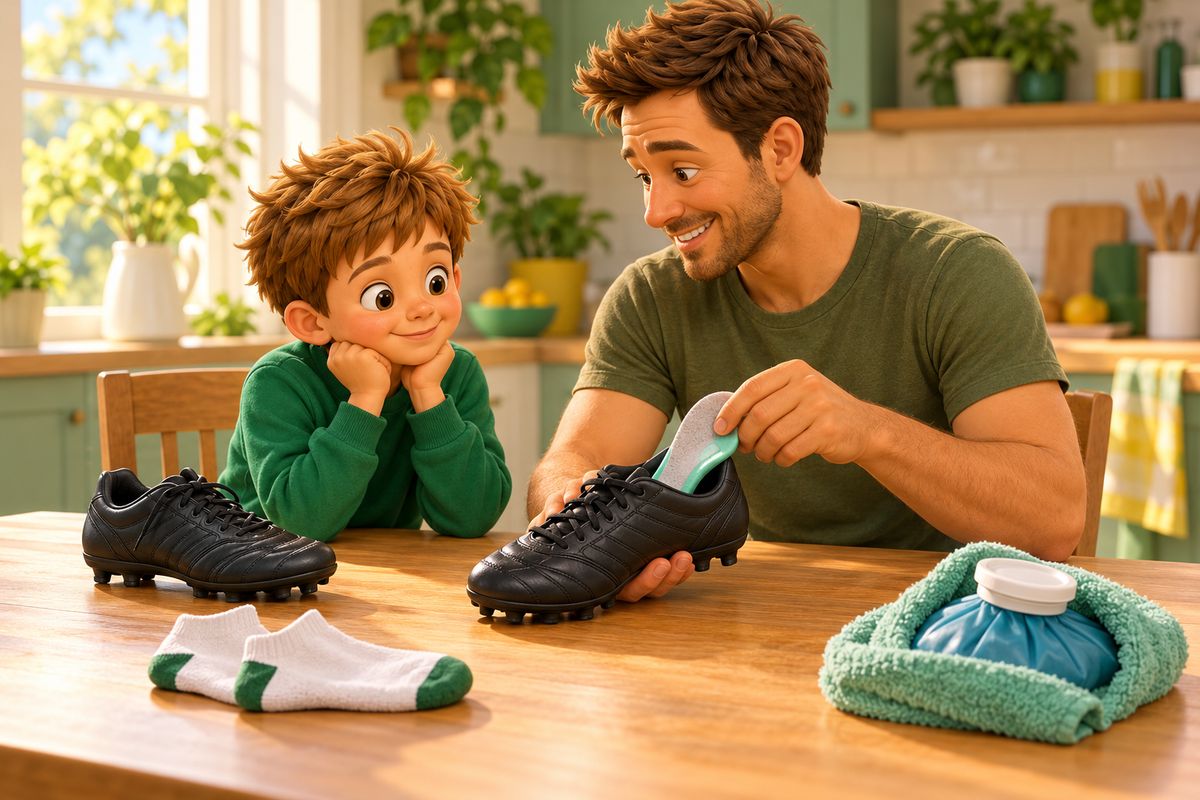
A heel is one of the few things that does not get better by being pushed through.
If your child is limping after football, these steps come from the Cambridge University Hospitals leaflet. Steps 1 to 4 you can do tonight, and step 5 waits until a clinician or physio has shown you the stretches.
Cushion the heel. Try shock-absorbing insoles or gel heel cups in the shoes your child wears most (Cambridge University Hospitals leaflet). The 2013 review found heel cups with arch support worked better than heel raises alone (a 2013 systematic review of treatments). For the shoes themselves, see the footwear check in choosing first football boots.
Wear supportive shoes. Avoid bare feet, including on hard floors (Cambridge University Hospitals leaflet). For play inside, see indoor football footwear and floors.
Rest and raise after play. Put the leg up after activity (Cambridge University Hospitals leaflet).
Ice, wrapped. Use ice for 10 to 15 minutes with a towel between the ice and the skin (Cambridge University Hospitals leaflet).
Stretch the calves. Do the stretches as a clinician or physio shows you (Cambridge University Hospitals leaflet).
If your child needs pain relief, ask a pharmacist or GP. This page gives no drug advice.
The leaflet is clinical guidance for the condition in general. It cannot say how long your child will need these steps.
Football stays in the week
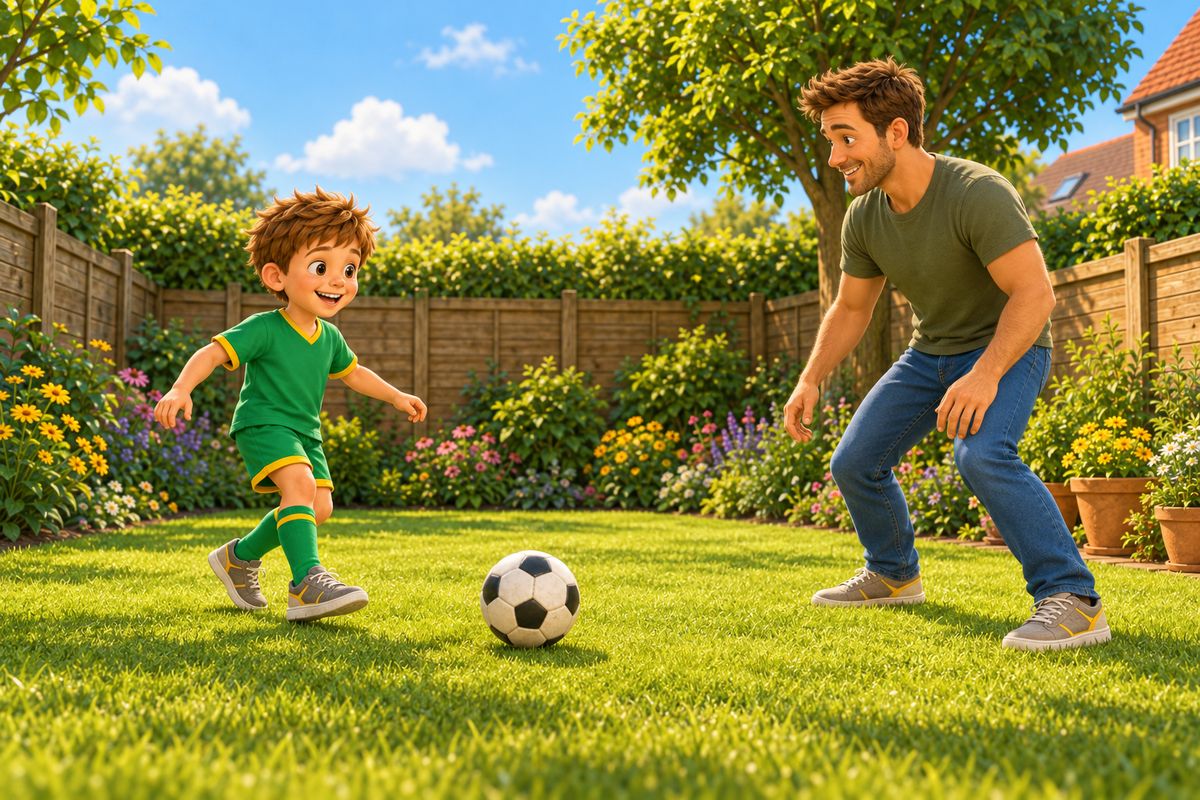
A child who loves football will not enjoy a week on the sofa, and the leaflet says to return to activity gradually as the pain eases. Here is a ladder from least to most load on the heel.
| Impact | Idea | Why |
|---|---|---|
| Low | Seated or standing passing at short range, or wall and fence passing kept to gentle rolls. | No running or jumping, so the Achilles tendon tugs very little. |
| Medium | Target games and three-item target shooting with walking-pace kicks. | Plenty of kicking and aiming, with no sprinting. |
| Higher | Short dribbling games, only on a green day. | Starts and stops load the heel more, so save them for when it is quiet. |
"Shall we do the target game today and save the running for tomorrow?"
Let the pain decide how long a game lasts. If it flares, drop down a rung and call it a normal day.
Pain can return in a later growth spurt, which is common and not a failure on anyone's part (Cambridge University Hospitals leaflet).
What is known and what is not
The Cambridge University Hospitals leaflet describes the cause, the home care above and the outlook. It says "there is no evidence to suggest that playing sports causes long term damage to the structures at the heel", and that pain typically settles once growth slows. It is patient guidance, not a trial, and it is not written about football.
A 2013 systematic review pooled nine studies of about 330 children aged 6 to 15. Orthoses with a heel cup and arch support reduced pain in activity more than heel raises, heel raises beat no treatment, and taping only gave short-term relief. The authors judged the evidence limited and asked readers to view the results with caution.
The studies were mostly small and of low quality, and most children were aged 8 to 15, so they do not prove what will help your child, especially a younger one.
The "when to see a GP" lines in the traffic light are common-sense safety advice, not taken from either source.
Quick answers
It is often Sever's disease, where the Achilles tendon pulls on the heel bone during a growth spurt (Cambridge University Hospitals leaflet). Only a clinician can confirm it.
Not always. The leaflet says sport does not cause long-term heel damage and that play resumes gradually as pain eases (Cambridge University Hospitals leaflet). Cut back running, and see a GP if any red sign in the traffic light applies.
Cushioned insoles or heel cups, supportive shoes, rest, wrapped ice and calf stretches (Cambridge University Hospitals leaflet). A 2013 review found heel cups with arch support worked better than heel raises alone (systematic review).
It usually settles as growth slows and can return in later growth spurts (Cambridge University Hospitals leaflet). The leaflet gives no fixed timescale, so ask your GP what to expect.
A limp after football can come from several things. If it persists, follows a fall, your child will not put weight on the foot or any red sign in the traffic light applies, ask a GP.
Keep going
Three places to go next, depending on what you need. If the pain came from a twist rather than growth, getting a child back to football after a sprained ankle goes step by step. And for a dark toenail after football, when a black toenail needs a doctor is worth a read. If flat feet could be part of it, flat feet and playing football is worth a read.
Astro or firm ground, fit and what to spend, for a child's first pair.
Read about first bootsA green, amber and red plan and roles that keep a child in the game.
Read about playing with a castFootwear and floor choices for play inside the house.
Read about indoor footwearTonight's five minutes
Look at your child's heel, check the shoes they wear most and pick one low-impact game for tomorrow. Let the pain decide how long it lasts.