Has a neighbour already complained?
A calm reply, a few quieter games and a time when the ball goes away.
Read the calm reply
A no ball games sign is not always the end of the game. If your child's nearest open space has a no ball games sign, the sign is usually a request, and there is almost always somewhere else that is allowed.
For a long time I assumed a sign meant a rule and walked us home. Then I read what the council actually said, and the evening got a lot more interesting. This is not legal advice, so check your own tenancy.
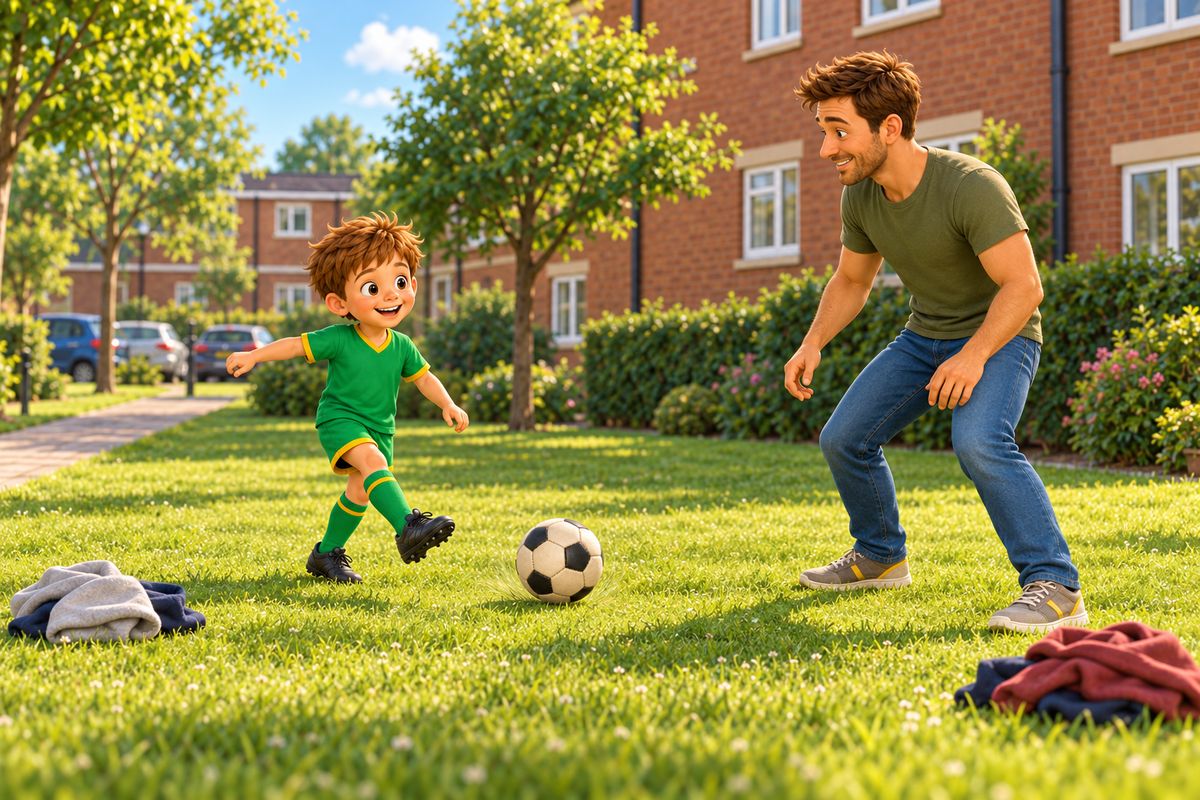
Read it before you obey it
Newham Council says "'No ball games' signs are a request, not a bylaw" and that it is not illegal to play football on a grassed verge or open space (Newham Council's guidance on ball games). Crawley says its signs "cannot be enforced by either the council or the police", and that open spaces are for everyone, including children (Crawley Borough Council's page on ball games). South Ribble says the signs are "a request and not a bye-law requirement" (South Ribble Borough Council's guidance).
So when people ask whether kids can play football on the green, those councils' answer is yes, with care. Those are three councils' own words about their own signs, not the law, and a council can only speak for land it manages.
Here is the catch. The sign may belong to a housing association, a landlord or a management company, who can write rules into a tenancy or lease. A Scottish council's page on the signs notes that housing associations may put the signs on their own developments, and one housing manager said such signs "protect windows" (Islington Tribune).
That is one council and one manager, so the law on your landlord's sign is not set out in anything I read. England, Wales, Scotland and Northern Ireland may differ, and only English councils are quoted above for the main point.
The sign is a clue, not a verdict.
Ask who put it up: the council, the landlord or a management company. That tells you who can actually say yes.
None of this is legal advice.
Pick the place, then the ball

Councils name parks and recreation grounds as the place for ball games, and one notes there may be only one grassed area nearby (Newham Council's guidance on ball games). The aim is the nearest place that is allowed and safe, not the most convenient one.
| Place | Works when | Check first |
|---|---|---|
| A private garden, balcony or yard | You have one, and the ball stays in. | Windows and next door's fence. Use a soft ball. |
| A communal space the landlord says is fine | The landlord or resident group agrees in writing. | Your tenancy or lease, and the agreed hours. |
| A grass verge or open green with no landlord sign | You can keep the ball well away from windows, cars and paths. | Distance from windows, cars and paths. Councils say it is not illegal (Newham, South Ribble). |
| A park or recreation ground | There is a flat patch away from paths and play areas. | Any park rules posted at the gate. |
| Indoors | It is wet, dark or the only option. | A soft ball and the people below you. |
The walk to the park is part of the game, so let your child carry the ball. If you have no garden at all, the weekly rhythm in football at home without a garden fits around the park trip.
For a ball that will not bother anyone, see quiet football ball options. If the only flat space is the road, read football near a road or street first.
Say it before they have to
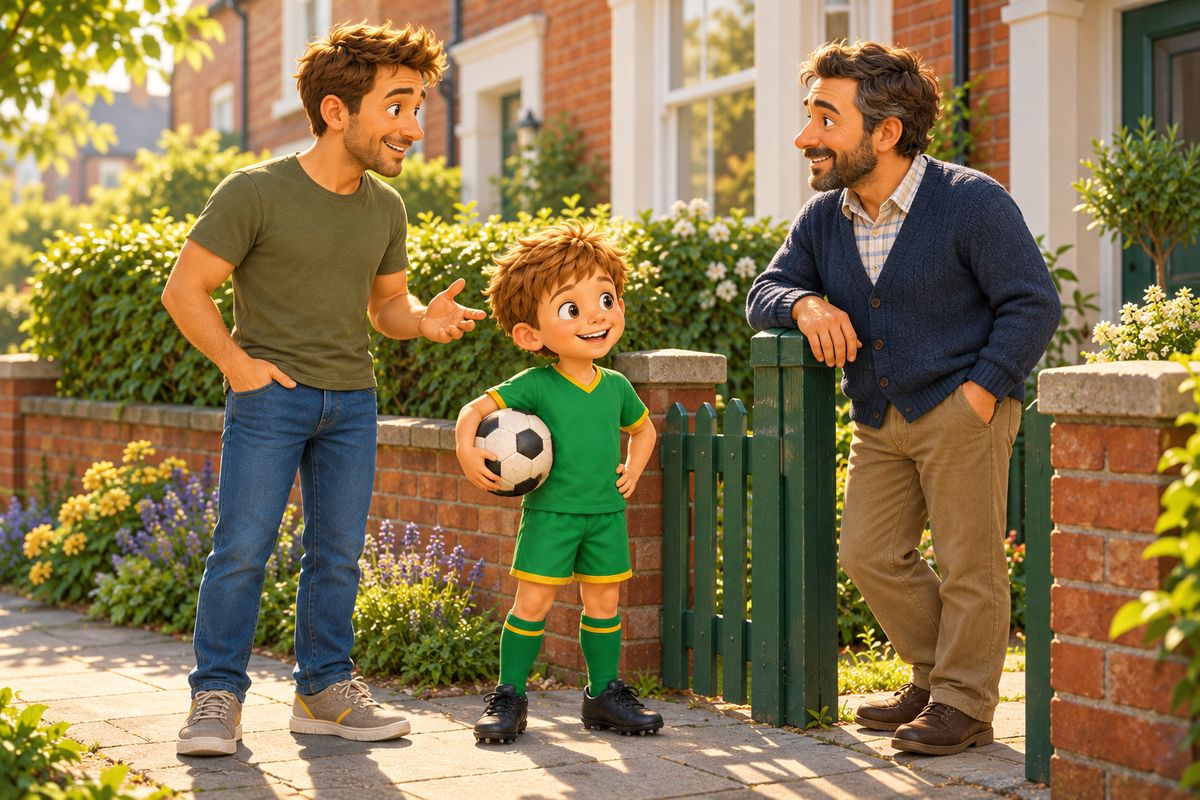
Councils advise a quiet word before an official one (Crawley Borough Council's page on ball games). A lost ball is a knock on the door, not a standoff (North Tyneside Council's advice on children playing).
"We'll keep it to a soft ball on the grass, away from your windows, and stop by six. Does that work?"
"Shall we play here when the grass is quiet, and move to the park when it's busy?"
"Sorry about that, could we have our ball back, please?" Knock, do not climb, and say thanks.
The ground rules are short. Use a soft ball, agree one stop time and mark goals with jumpers away from windows, cars and doors. Keep the ball under your foot near a car park.
These are practical suggestions, not a rule from any council. Complaints are fair if children "harass, intimidate or disturb others" (North Tyneside), and South Ribble says damage and trespass can be reported to the police (South Ribble). The suggestions protect your child too.
Ask, in writing, once
I used to treat a sign on our block as untouchable, until a short email asked what it was protecting and got a straight answer. Four steps keep it calm, and none of them asks you to ignore your tenancy.
Find out who put it up. Look at the sign, the estate notice board or your landlord's website.
Read your tenancy or lease. Look for words on play, ball games or communal areas, and note exactly what they say.
Ask what it is for. Send a short email: "Could you tell me whether the ball games sign is a rule in our tenancy or a request, and what it is meant to protect?" Many signs protect windows and cars (one housing manager).
Offer a trial. Suggest a soft ball, set hours and a corner away from windows, and ask for a reply in writing.
Some landlords and councils have removed or reconsidered signs, according to a Playing Out guide for housing providers and a Scottish council, though I could not check each case.
If the landlord says no, accept it and use the park. A tenancy or housing adviser, such as Shelter or Citizens Advice, can say what the lease means. This is not legal advice.
What is known and what is not
Newham and South Ribble say the signs are a request, not a bylaw, and Crawley says its signs cannot be enforced by the council or the police (Newham, Crawley, South Ribble). That is three English councils' own wording about their own signs, not a court ruling.
Scottish Borders Council says the signs have no legal basis and that housing associations may put them on their own developments (Scottish Borders). That is a Scottish council, so England, Wales and Northern Ireland may differ, and I did not read the regulations behind its statement.
North Tyneside says a ball in a neighbour's garden is a knock on the door and that withholding balls causes disputes (North Tyneside). That is one council's view of good manners, not a legal duty.
A housing manager said the signs protect windows (Islington Tribune, 2018), and a charity guide says tenancy terms can limit play and residents can raise it with the landlord (Playing Out). That is one manager in 2018, plus an advocacy document whose date I took from the file name.
Nothing I read sets out the law on a landlord's sign in a tenancy, so read your own. Scotland, Wales and Northern Ireland were not fully checked.
Quick answers
Newham and South Ribble say it is a request, not a bylaw, and Crawley says its signs cannot be enforced by the council or the police (Newham, Crawley, South Ribble). A landlord's tenancy or lease may say more, so check yours. This is not legal advice.
Newham says it is not illegal to play on a grassed verge or open space, and Crawley says open spaces are for everyone. Keep clear of windows and cars, and check whether the land belongs to a landlord who has its own rule.
A garden, an agreed communal spot, open grass with no landlord sign or a park (Newham names parks and recreation grounds). Indoors with a soft ball is the fallback when nothing else works.
Often a landlord, housing association or management company. One council says housing associations may put them on their own developments (Scottish Borders). Ask who put yours up.
Thank them, ask which sound or place bothers them and offer one small change, as in the calm-reply advice in football when a neighbour complains. Councils say a quiet word works better than an official one (Crawley).
Knock and ask for it back, say thanks and do not climb the fence. One council says withholding balls leads to disputes (North Tyneside).
Keep going
Three places to go next, depending on what is on your mind. Away camping instead? Campsite football games for kids fit a tight pitch.
A calm reply, a few quieter games and a time when the ball goes away.
Read the calm replyThe safest answer first, then the law and five rules for when the street is all you have.
Read about the streetA weekly rhythm of short indoor sessions and one park visit.
See the weekly rhythmTonight's five minutes
Look at the sign, find out who it belongs to and pick one allowed place for tomorrow. Take a soft ball, keep clear of windows and cars and stop at a time you have said out loud.